Renders and Explorations
Three projects from my undergraduate years at the National Institute of Design - a guitar, a sneaker, and a synthesizer. Each one started the same way: something I personally wanted to exist, couldn't find, and decided to design instead.
Tomahawk
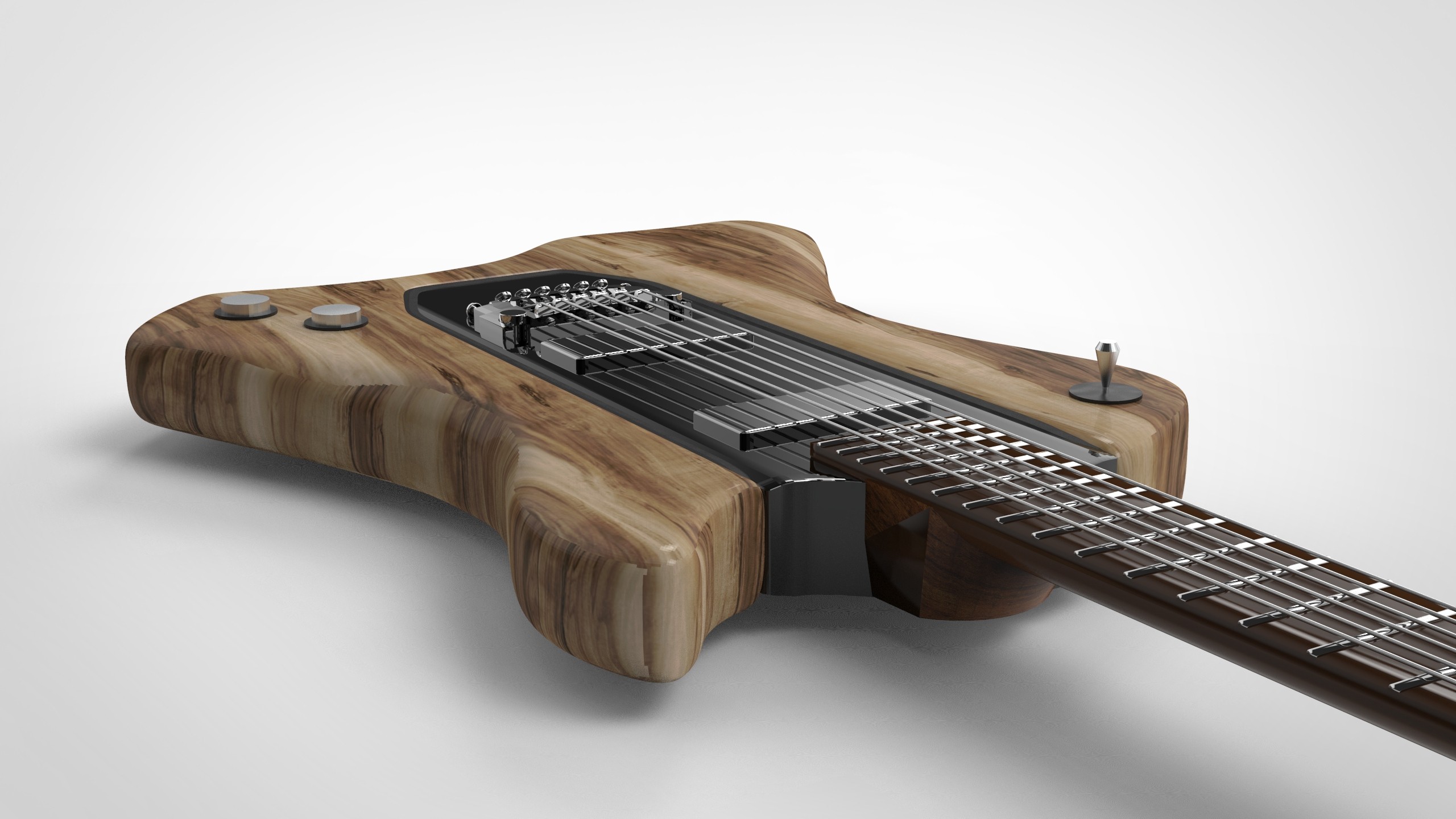
The Les Paul is iconic. It's also heavy, unbalanced, and hard on your wrists after an hour. As a guitarist, I'd felt this enough times to want to do something about it.
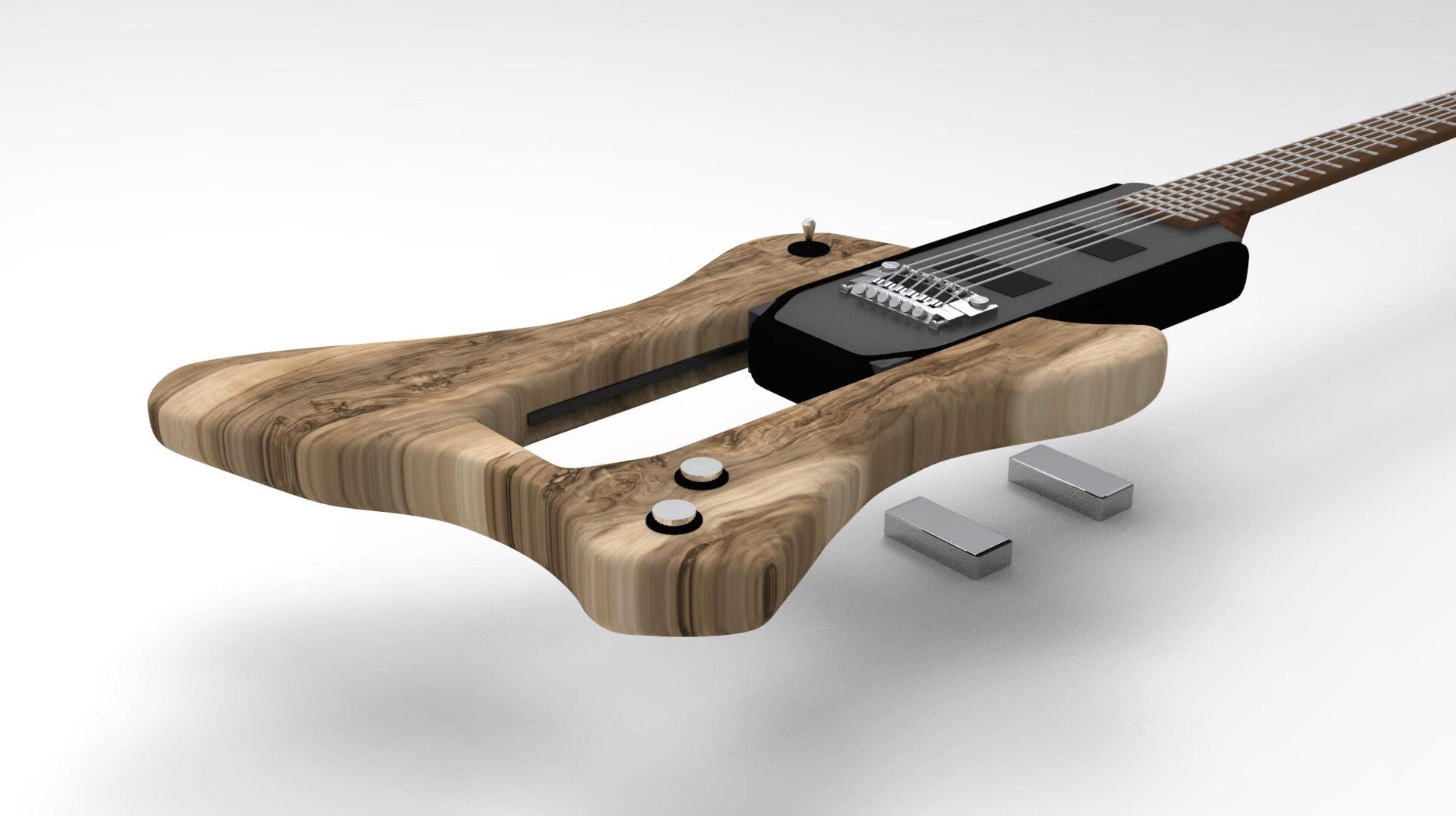
Tomahawk is a concept electric guitar built around the body — literally. A scooped form that sits naturally against the torso, a deep cutaway for fret access, chamfered edges for picking-hand comfort, and a modular construction that lets musicians swap body styles and pickups. The goal wasn't to reinvent the guitar. It was to make it less punishing to play, without losing the thing that makes it feel like a guitar.
Researched with 31 musicians. Designed in CAD. Tested. Iterated. Still plays power chords in the dark.
Proton
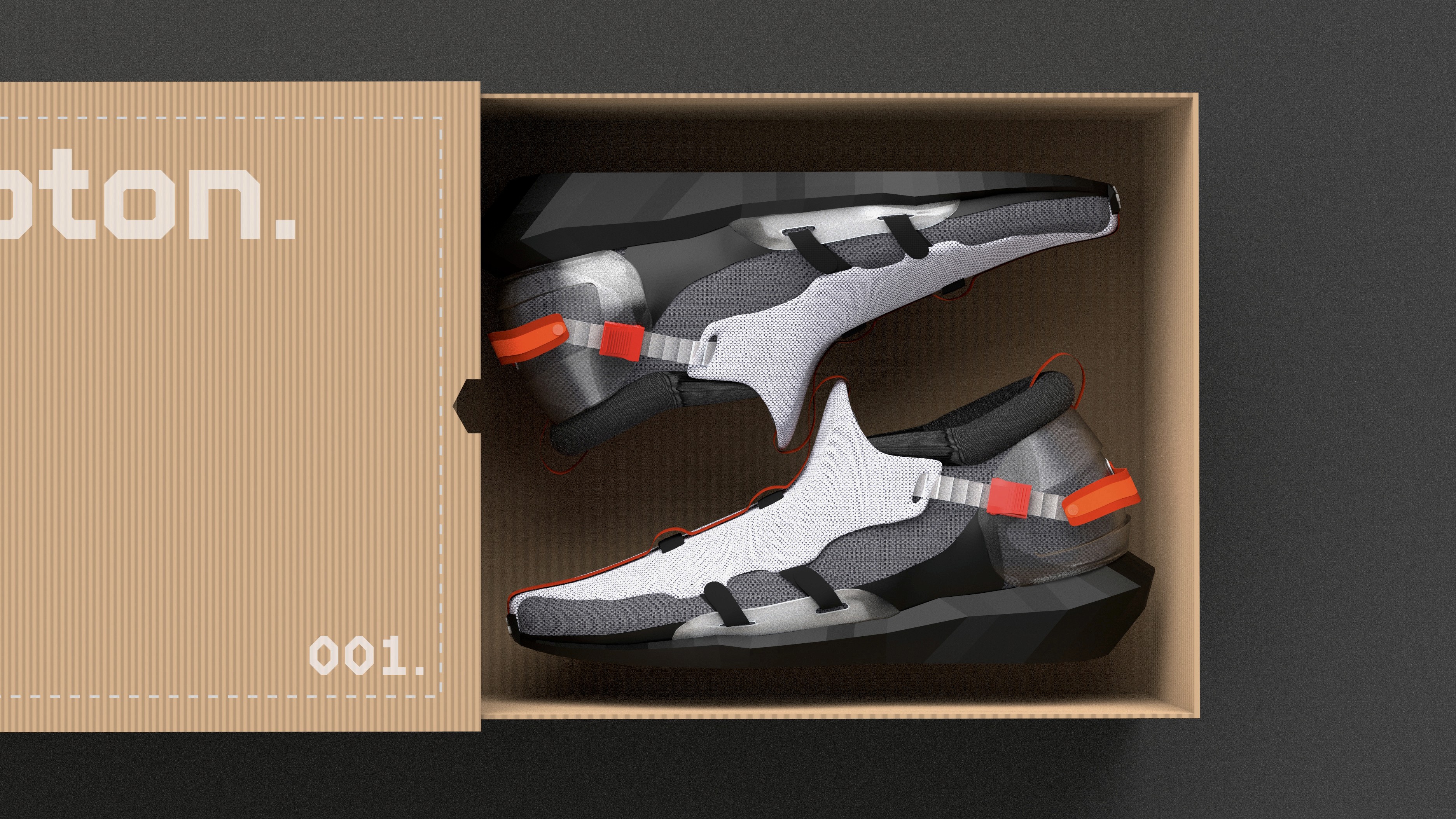
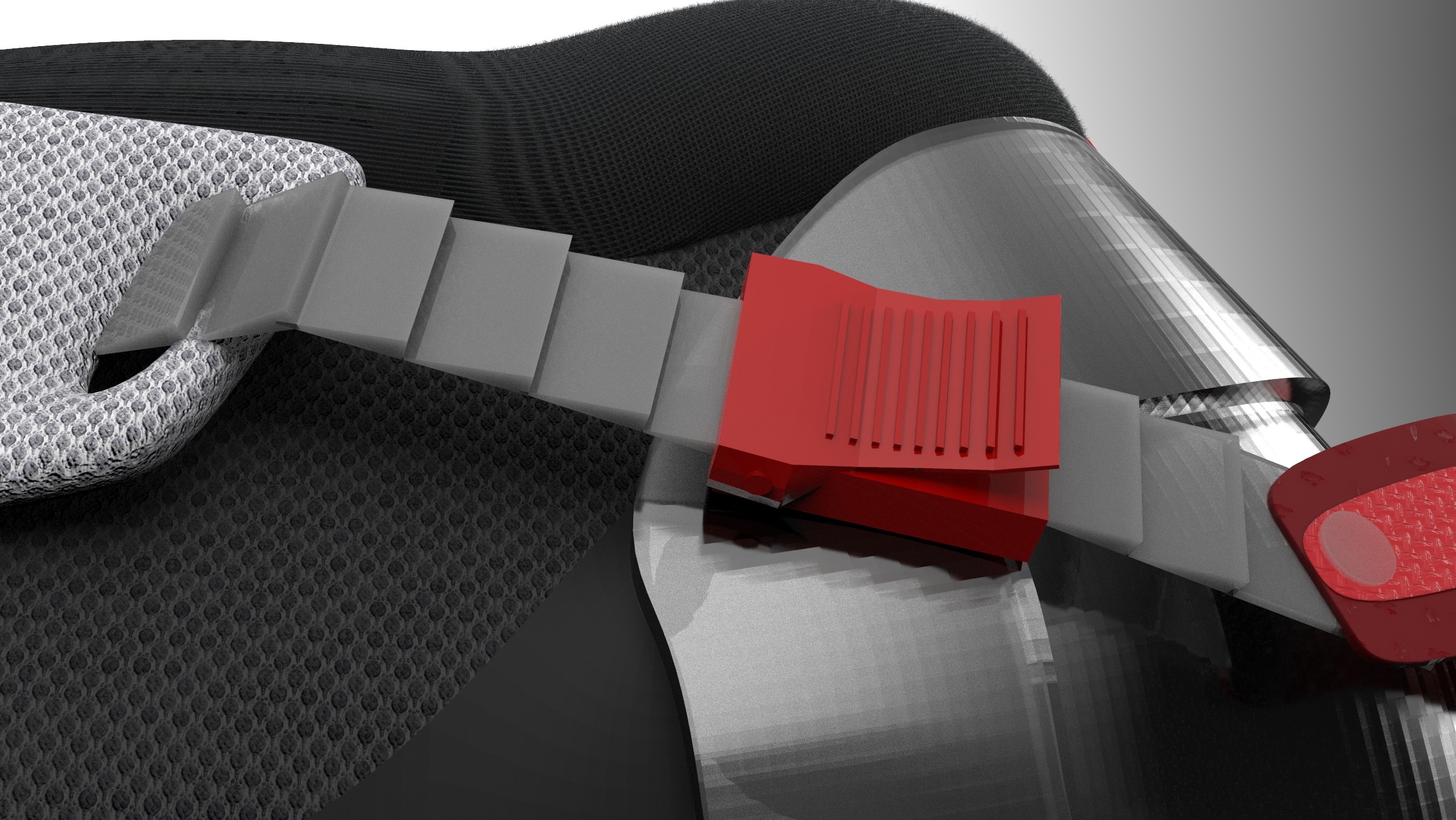
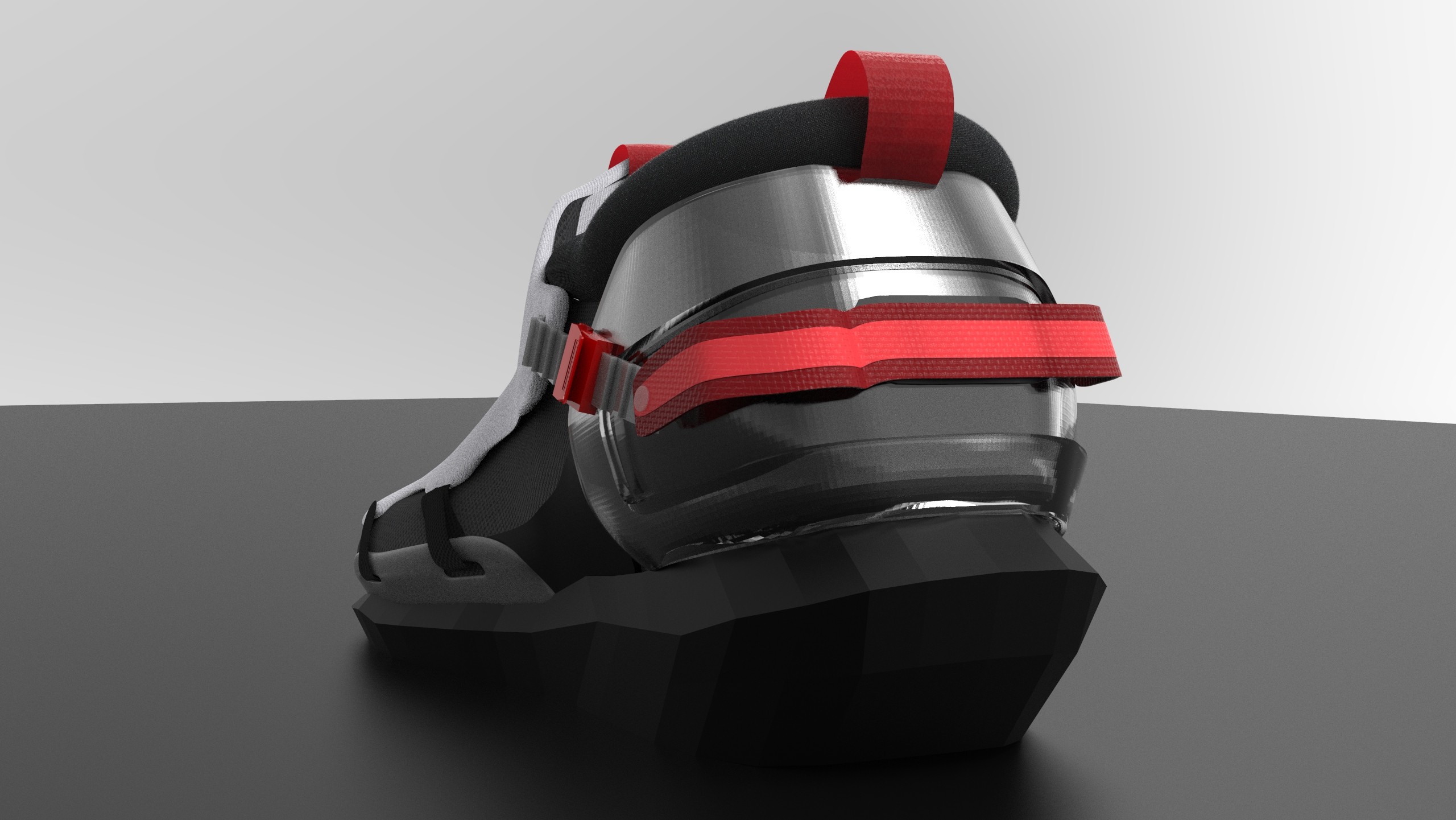
Flat feet and loose laces are a specific kind of frustration. Not dramatic, just constant. Proton started there — a lace-free sneaker concept built around a compression strap system that actually holds the mid-foot in place, with a toothed strap for precise adjustment and a velcro heel pull for getting in and out without the faff.
The silhouette came from fast cars. The details came from testing. Six weeks of sketching fastening systems, prototyping, and figuring out how to make something that fits well enough that you stop thinking about it.
Polywave
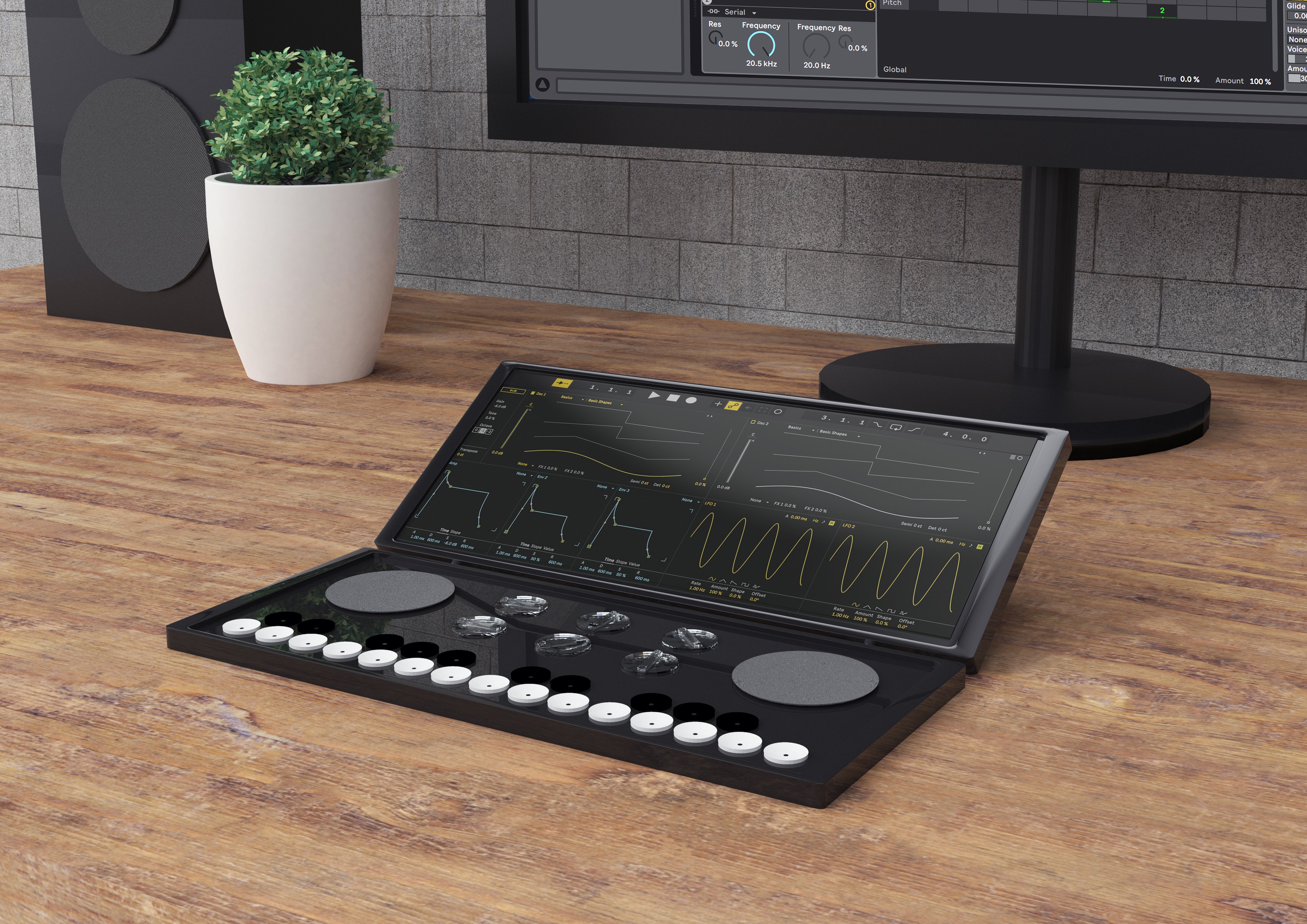
A pocket synthesizer for when the studio doesn't come with you. Folds like a book. Opens into pressure-sensitive keys, six programmable encoders, a multitouch OLED screen, and stereo speakers — all small enough to actually carry.
The starting point was simple: software synths on a phone don't feel like anything. There's no tactile feedback, no physical connection to the sound. Polywave was an attempt to bring that back without making something you'd need a bag for. The design decisions — concave keys, endless encoders, the fold — were all about making something that feels considered rather than compressed.